
Maruti Suzuki India (MSIL) has ambitious plans to increase capacity. It is also seeking shareholders' approval for a complex swap transaction, which would acquire Suzuki Motor Gujarat (SMG), a subsidiary of Suzuki Motor Corporation (SMC) through a preferential offer. SMC already holds 56.37 per cent of MSIL's equity.

Recently, TPEM's first born electric concept, Avinya broke cover. The model promises a minimum range of 500 kilometres and advanced technology features, aimed at buyers in India and outside. TPEM, the newly formed entity may also consider a separate dedicated sales channel for the EVs with a distinctive corporate identity once the volumes reach a critical mass and throughput is large enough for the dealers to be profitable, said Chandra. Elaborating further on the hiring strategy he said, "We will hire from everywhere-wherever the talent of the required competency is available."
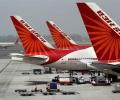
The government on Monday issued a letter of intent (LoI) confirming the sale of its 100 per cent stake in loss-making Air India to Tata Group for Rs 18,000 crore, a senior official said. Last week, the government had accepted an offer by Talace Pvt Ltd, a unit of the holding company of salt-to-software conglomerate, to pay Rs 2,700 crore in cash and takeover Rs 15,300 crore of the airline's debt. Subsequent to that, an LoI has now been issued to Tata confirming the government's willingness to sell its 100 per cent stake in the airline.

Having established its presence in the country, luxury carmaker Lexus is now looking to chart its next phase of growth in India as it looks to consolidate sales network and drive in new models, including fully electric cars in the country, according to a top company official. The company, which is the luxury car arm of Japanese auto major Toyota, initiated operations in India in 2017 and currently sells seven models in the country, including the locally-produced ES 300h sedan. Known for its self charging hybrid cars, the company is now gearing up to drive in battery electric vehicles, besides ramping up its existing product portfolio in the market.

With sentiment for the automotive (auto) sector turning positive, stocks of two-wheeler auto majors have been hitting their 52-week highs. Hero MotoCorp, Bajaj Auto, TVS Motor Company, and Eicher Motors recently reached their yearly highs on strong sales in the festival season and the expectation of faster growth rates ahead. Since the start of this month, listed two-wheeler majors have delivered returns in the 12-17 per cent range, compared to the 7 per cent gains for the S&P BSE Auto Index and 3 per cent for the benchmark S&P BSE Sensex.

Avenue Supermarts, the operator of DMart retail chain, reported good results for the July-September quarter (Q2FY24) with strong earnings before interest before interest, taxes and depreciation (Ebitda) and profit before tax (PBT) growth, but lower PAT due to higher tax incidence. The operating margin improved, and like-to-like store sales growth was strong. Average bill value also increased though this may be a seasonal effect to some extent. Analysts are assuming this means the slowdown in retail may have bottomed out.

Nearly a decade ago, the first fully electric vehicle (EV) caught fire on the road in the US. It was a model from Tesla, the world's most admired EV maker. A metal fragment punctured the underbelly of the vehicle, penetrating its battery pack, leading to a fire. Indian lawmakers and automakers have had nine years to study the incident (in fact, three Tesla Model Ss caught fire in two months in 2013) but seem to have learnt little.

Foreign brokerage firm CLSA initiated coverage on the stock with a Sell rating and target price of Rs 1,095, citing hefty premium valuation.
As Mumbai's real estate and electric vehicle penetration grows, two of the city's private power distribution companies, Adani Electricity and Tata Power, are eyeing a bigger business pie, particularly betting on high-value customers. Adani Electricity Mumbai (AEML), the subsidiary which houses Adani Energy Solutions' Mumbai distribution business, recorded a six per cent growth in total units sold in the financial year 2023-24 (FY24), the company's presentation shows. This gain came at over 13 per cent growth in the year-ago period.

Even as India overtakes Japan in automotive sales in 2022, moving to third place for the first time, oddly enough the country's biggest motor show is going to see some big hitters give it a clear miss. Some prominent automotive brands have cited high event costs, negligible returns on investment, poor event management, and unfavourable location as reasons for their reluctance to participate. Major pure-play electric two-wheelers, too, are riding past this year's edition of the Auto Expo.

The board of Maruti Suzuki India (MSIL) on Tuesday approved a proposal to issue shares worth Rs 12,841 crore to parent company Suzuki Motor Corporation (SMC) for acquiring Suzuki Motor Gujarat (SMG). The Gujarat manufacturing plant - with an annual capacity of 750,000 units - is owned by SMG, a wholly-owned subsidiary of SMC. The shares issued to SMC will raise its ownership in MSIL from 56.48 per cent to 58.19 per cent--India's largest carmaker stated in a notice to BSE.
India will have 30 per cent of its two-wheeler industry turning electric by 2030 as new manufacturers lead the shift, said a report on Monday. Passenger vehicles will be 15 per cent electric and the three-wheeler segment 75 per cent electric by 2030, said the report by BNP Paribas called 'India Autos-Electric vehicles: Minutes to midnight'. "We see FY22 as the year of inflection for the two-wheeler EV industry, with an accelerated EV adoption helped by incentives, wider availability, model launches, rise in crude prices and improved general awareness. We see 30 per cent of the 2W industry turning electric by 2030; the pace of incentive withdrawal presents an upside/downside risk," the report (India Autos - Electric vehicles: Minutes to midnight) said.

Audi's strategy seems to point to pushing technology to directly connect with consumers using digital platforms and marketing to synchromesh into one seamless experience, says Pavan Lall.
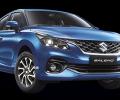
Maruti Suzuki India (MSI) will keep consolidating its existing product line-up, including hatchbacks, while bolstering presence in the fast growing SUV segment to power its way back to 50 per cent market share in the domestic passenger vehicle market, as per a senior company official. The country's largest carmaker, which has seen its market share drop to 43.38 per cent in FY22 from 47.7 per cent in FY21, aims to bring in multiple SUV products with focus on new technologies like hybrid powertrains in order to enhance fuel efficiency, making them comparable or better than diesel-powered models that are currently being sold in the market, especially by its Korean rivals. With no intention of making a comeback in the diesel segment, MSI is also focusing on increasing its play in the CNG segment to bring in additional volumes.


The three companies - Ola, Hyundai and Kia - will co-create solutions to operate and manage fleet vehicles.

To ramp up domestic battery manufacturing capacity and reduce the dependence on imports, the government has initiated talks with a few lithium-rich countries to supply the mineral to Indian companies, industry sources informed Business Standard. The Ministry of External Affairs (MEA) held a meeting with the ambassadors of countries, including Argentina, Chile, and Bolivia, among others, to put forth its request.
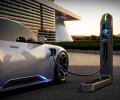
With a million-odd electric vehicles (EVs) - two-wheelers, e-rickshaws, buses and passenger cars - expected to hit the road this calendar year, the shift from gasoline-powered vehicles has become irreversible. Now the question is whether the supply chain is ready for this shift. Key components - the high-powered lithium-ion battery and the cells which go with it, the electric motor, and the electronics powered by chips - account for nearly 60 per cent of the cost of an EV.

Ola co-founder Bhavish Aggarwal on Thursday said Ola Electric sold scooters worth over Rs 600 crore on the first day of the sale of its model S1. The executive noted that the company will shut the purchasing process from Thursday midnight. Ola Electric had on Wednesday commenced the sale process of its electric scooter, which comes in two trims - Ola S1 and S1 Pro.
Taking a cue from Zomato's stellar initial public offering (IPO), through which it garnered a valuation of Rs 1 trillion, the government has asked its advisors and valuers to ascertain if the Life Insurance Corporation of India (LIC) should be valued at Rs 10 trillion or more. The government is looking to offload about 10 per cent stake in LIC through the IPO. At that valuation, the government stands to net at least Rs 1 trillion from LIC's proposed IPO, which will boost the Centre's efforts to meet its disinvestment target of Rs 1.75 trillion for the current financial year.
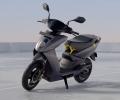
If you thought electric scooters have caught the fancy of only people in the metros, think again. According to data from electric two-wheeler maker, Ather Energy, 54 per cent of its sales of scooters, starting from Rs 1.2 lakh, come from Tier 2 and Tier 3 cities. Based on sales per lakh population, the top five cities for the company are Calicut, followed by Kochi, Kolaphur, Trivandrum and Pune.

Companies making electric two-wheelers, through their association Society of Manufacturers of Electric Vehicles (SMEV), have taken on the Department of Heavy Industries (DHI), saying they did not get subsidies for even half the mandated 1 million units they manufactured. Subsidies are given under Faster Adoption and Manufacturing of Hybrid and Electric Vehicles 2 (FAME II). In a petition to the parliamentary standing committee on industry energy and estimates, the SMEV said the department had done an "accounting error" by showing that it (the department) was close to achieving the mandated target by including sales of the EVs that were "not funded" under the scheme.

Ola Electric on Thursday teased five new electric motorcycles that the SoftBank-backed company is working on, announcing the range after selling electric scooters. The products are labelled cafe racer, an adventure tourer, a scrambler and a naked motorcycle. The motorcycles are expected to be launched next year and would include premium and mass-market versions, said sources.

Tata Motors group's investment for this fiscal is pegged at Rs 28,900 crore, mostly for its British arm Jaguar Land Rover (JLR), company chairman N Chandrasekaran said on Friday. The company will also look to raise capital separately for its electric vehicles (EV) business at an appropriate time. It is looking to have 25 per cent of its sales coming from EVs in the medium to long term, up from 2 per cent at present, he said while addressing the company's virtual AGM.

Maruti Suzuki says it has sold at least one car in 418,000 villages.

'Favourable product mix, sales recovery, and cost saving initiatives are expected to support margins going ahead while focus on debt reduction (target of debt free by FY24) will aid balance sheet strength'

India's flagship motor show Auto Expo 2023 kicked off on Wednesday with the global unveiling of Suzuki Motor Corporation's concept electric SUV 'eVX' which is slated to hit the market by 2025. The company's Indian arm Maruti Suzuki India is among the major manufacturers participating in the show that has returned after three years. The Concept eVX is a mid-size electric SUV concept designed and developed by Suzuki Motor Corporation (SMC), Japan. It will be powered by a 60 kWh battery pack offering up to 550 km of driving range on single charge.
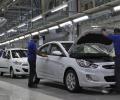
The government has decided to extend the Rs 25,938-crore production-linked incentive scheme for the automotive sector by one year, Union Heavy Industries Minister Mahendra Nath Pandey said on Tuesday. Post extension, the five-year scheme, originally in place from 2022-23 to 2026-27, will be active until 2027-28. At present, incentives are applicable under the scheme for determined sales of Advanced Automotive Technology (AAT) products (vehicles and components) manufactured in India from 1 April 2022 onwards for a period of five consecutive years.

Auto industry volumes have grown by 2.5 per cent overall, led by domestic sales of three-wheelers, two-wheelers and passenger vehicles (PVs) in the first quarter of this financial year. Analysts predict an 18 per cent growth in revenues for automotive original equipment manufacturers (OEMs) and profit growth of 69 per cent year-on-year (YoY). However, on a sequential basis, a decline in revenues as well as earnings before interest, taxes, depreciation, and amortisation (Ebitda) margins is expected.
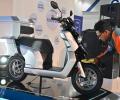
Based on discussions with stakeholders, the ministry is proposing to allocate Rs 26,400 crore for FAME-III subsidy alone with electric two wheelers getting around Rs 8,158 crore, electric buses Rs 9,600 crore and electric three-wheelers Rs 4,100 crore, according to sources in the know. Along with some other components like setting up an innovation fund and money for testing , the total allocation could cross Rs 33,000 crore, estimates suggest.

'In India, the GenAI startup ecosystem is unfolding with remarkable speed, signalling a new era of technological advancement and investment opportunities.'

Union Minister Nitin Gadkari on Monday said American electric car major Tesla is set to start its operations in India next year and would also look at setting up of a manufacturing unit based on demand. The Road, Transport and Highways minister has been pushing for green fuel and electric vehicles for cutting India's huge Rs 8 lakh crore crude imports. Tesla Inc. co-founder and chief executive Elon Musk had in October said the company will enter the Indian market in 2021.

With rising petrol and diesel prices driving up demand for its CNG vehicles, the country's largest carmaker Maruti Suzuki India plans to widen its CNG portfolio by offering the fuel option in four more models 'very shortly', according to a senior company official. The company, which plans to launch an electric vehicle (EV) in the Indian market by 2025, is also currently keeping a close watch on the country's EV ecosystem "to find out what is the best way of evolution" to be able to offer affordable EVs with hassle free charging infrastructure in order to clock high volumes for a sustainable business.

'Some of the launches may get deferred due to the semiconductor shortage, which is unlikely to get resolved before the second half of 2022.'
The heavy industries ministry has asked US-based electric car major Tesla to first start manufacturing its iconic electric vehicles in India before any tax concessions can be considered, government sources said. They said that the government is not giving such concessions to any auto firm and giving duty benefits to Tesla will not send a good signal to other companies that have invested billions of dollars in India. Tesla has demanded reduction in import duties on electric vehicles (EVs) in India.
Maruti Suzuki, Hyundai and Tata Motors reported their highest-ever dispatches to dealers last fiscal, enabling the domestic passenger vehicle industry to log in best-ever performance to date. The country's largest carmaker Maruti Suzuki India reported its highest wholesales to date at 19,66,164 units, up 19 per cent from 16,52,653 units in 2021-22. Its domestic dispatches rose to 17,06,831 units in 2022-23, up 21 per cent from 14,14,277 units in 2021-22 fiscal.Hyundai Motor India said its overall wholesales last fiscal were the highest ever since commencing operations in the country.
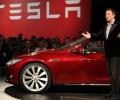
Union Minister Nitin Gadkari on Tuesday said if the US-based Tesla is ready to manufacture its electric vehicles in India then there is 'no problem' but the company must not import cars from China. In an interactive session at the Raisina Dialogue, Gadkari further said India is a large market and there is a huge potential for all electric vehicles. "If Elon Musk (Tesla CEO) is ready to manufacture in India then there is no problem ... Come to India, start manufacturing, India is a large market they can export from India," he said. The road transport and highways minister said his request to Musk is to come and manufacture in India.
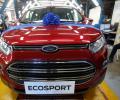
Ford, which had announced to quit the Indian market last year, said it was exploring the possibility of using one of its plants in India to produce electric cars for exports.

Rakesh Jhunjhunwala-backed Nazara Technologies is all set to hit the primary market with its Rs 583-crore IPO on Wednesday. The diversified and online gaming firm's three-day issue will run through March 17-19 and will be entirely an offer for sale (OFS). While 5.29 million equity shares will be offloaded via OFS by some of the shareholders, Rakesh Jhunjhunwala, who owns 3.29 million shares or 11.51 per cent stake in the company as of September 30, 2020, has decided to hold on to his stake. The issue has a price band of Rs 1,100-1,101 and will be available in lots of 13 shares and multiples thereof.

As Ayodhya readies itself for the glittering, much-awaited consecration ceremony of the Ram Mandir on January 22, and as millions of pilgrims and devotees pour into the holy city for the momentous event, companies are rushing to do their bit and be a part of the mega celebrations. Some are offering a part of their profits as donations, telcos are beefing up the number of cellular towers to ensure better connectivity, and there are those distributing jalebis and food platters.
